Classic
EVEREST BASE CAMP TREK WITH HELICOPTER RETURN – 9 DAYS
Follow the iconic Everest trail through the heart of the Khumbu, combining Sherpa culture, spectacular mountain views, and the unforgettable achievement of reaching Everest Base Camp.
Duration
14
Group Size
8
Physical Rating
Level 3
Transport
Flight
Max Altitude
5,360 m/17,585 ft
Best Season
Mar-May, Sep-Nov
Accommodation
Tea House & Hotel
Meals
Included
Start/End Point
Kathmandu
Trip Overview
This nine-day journey is a genuine trek to Everest Base Camp followed by a planned helicopter return from the upper Khumbu. It follows the classic trail from Lukla through Phakding, Namche Bazaar, Tengboche, Dingboche and Lobuche, reaches base camp on foot and stays overnight at Gorak Shep. The itinerary includes two acclimatization days—one in Namche Bazaar and one in Dingboche—making it substantially better paced than the seven- and eight-day express versions. After an optional early climb of Kala Patthar, the planned helicopter pickup is from Gorak Shep or another approved operational site, not from Everest Base Camp. Although the return flight saves several walking days, this remains a challenging high-altitude trek. Weather, health, flight schedules, payload restrictions and aircraft availability may require changes or extra nights.
Trek Highlights
- Reach Everest Base Camp on foot beside the Khumbu Glacier.
- Attempt Kala Patthar for the classic close-range Everest panorama.
- Acclimatize in both Namche Bazaar and Dingboche.
- Visit Tengboche and experience the cultural landscape of the Khumbu.
- Walk through Sagarmatha National Park and traditional Sherpa settlements.
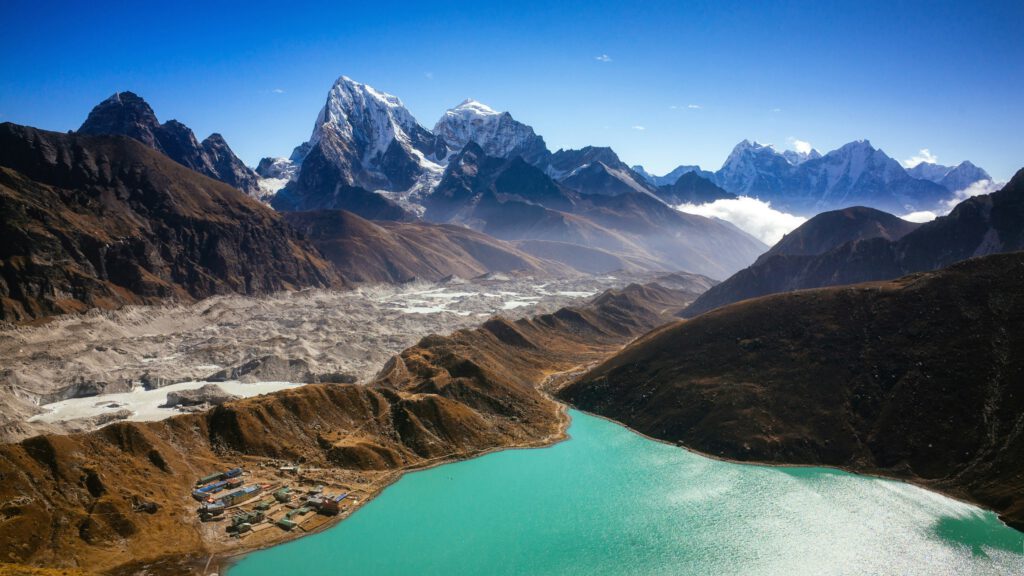
- See Everest, Lhotse, Nuptse, Ama Dablam and Pumori in clear conditions.
- Avoid the multi-day walking descent with a planned upper-Khumbu helicopter return.
- Experience the Everest region from both the trekking trail and air when conditions allow.
What's Included
- Scheduled Kathmandu airport and domestic-flight transfers.
- Fixed-wing flight to Lukla and applicable airport transfer.
- Planned shared helicopter return from the approved upper-Khumbu pickup point, only when explicitly confirmed in the quotation.
- Teahouse/lodge accommodation for the scheduled trekking nights.
- Meals during the trek only as specified in the confirmed package.
- Licensed English-speaking trekking guide and agreed porter support.
- Guide and porter wages, meals, accommodation, transport and insurance.
- Sagarmatha National Park entry permit and applicable Khumbu local permit.
- Basic group first-aid kit and emergency communication arrangement.
- Government taxes and company service charges.
Price Excludes
- International flights, Nepal visa and Kathmandu hotel unless specifically listed.
- Travel insurance, medical treatment and emergency evacuation or rescue helicopter.
- Extra acclimatization days, nights or meals required for health or safety.
- Costs caused by fixed-wing or helicopter delay, cancellation, diversion, shuttles beyond the contracted plan or forced overnight stays
- Private helicopter charter unless explicitly stated.
- Meals or drinks not included in the quotation.
- Personal clothing, footwear and trekking equipment.
- Hot showers, charging, Wi-Fi, bottled drinks, snacks and personal expenses.
- Tips for guides, porters, pilots, drivers and other staff.
- Anything not listed under “What Is Included.”
Gears & Equipment
Clothing and Footwear
Broken-in waterproof trekking boots,
Lightweight camp shoes or sandals,
Moisture-wicking base layers,
Fleece or insulated mid-layer,
Warm down jacket,
Waterproof and windproof shell jacket and trousers,h
Trekking trousers and thermal leggings,
Warm hat, sun hat and neck gaiter,
Light and insulated gloves,
Several pairs of trekking socks,
Equipment and Personal Items
Daypack with rain cover,
Duffel bag if porter support is included,
Four-season sleeping bag suitable for cold teahouse nights,
Trekking poles and headlamp with spare batteries,
UV-protection sunglasses and high-SPF sunscreen,
Reusable water bottles or hydration system and reliable purification method,
Personal medicines and a compact personal first-aid kit,
Passport, permits, insurance details and emergency contacts,
Power bank, charging cables and universal adapter,
Toiletries, hand sanitizer, quick-dry towel and reusable waste bags
Itinerary
Lukla – 2,860 m / 9,383 ft; Phakding – 2,610 m / 8,563 ft | Flight: approximately 30–40 minutes; trek: 3–4 hours
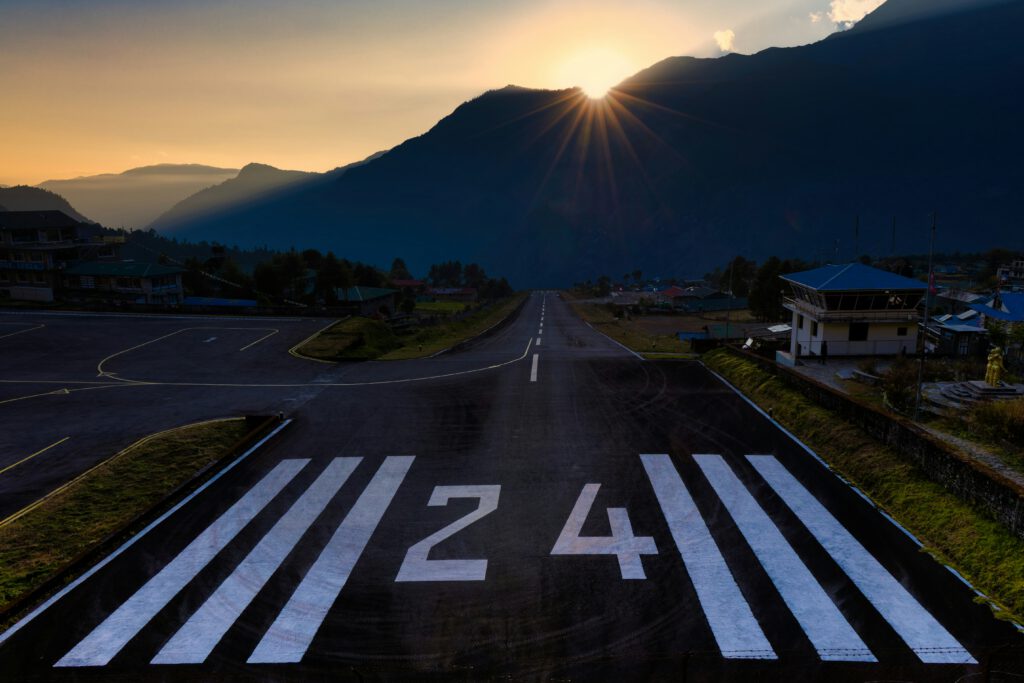
Transfer to the operating airport and fly to Lukla, subject to weather and airport operations. Meet the trekking team and walk through Chaurikharka beside the Dudh Koshi to Phakding. The group must report any symptoms after the rapid change from Kathmandu. Overnight in Phakding.
Namche Bazaar – 3,440 m / 11,286 ft | Trek: approximately 6–7 hours
Cross suspension bridges and pass Monjo before entering Sagarmatha National Park. Beyond Jorsalle, climb steeply through forest to Namche Bazaar. This sleeping-altitude gain exceeds conservative high-altitude guidance, making symptom monitoring essential. Overnight in Namche Bazaar.
Namche Bazaar – 3,440 m / 11,286 ft | Controlled hike: approximately 3–4 hours
Take a conservative acclimatization hike toward Syangboche or another location selected by the guide, then return to sleep in Namche. No client with worsening altitude symptoms should continue higher. Rest, hydrate and complete the health assessment. Overnight in Namche Bazaar.
Tengboche – approximately 3,860 m / 12,664 ft | Trek: approximately 5–6 hours
Traverse above the Dudh Koshi, descend to Phunki Tenga and climb through forest to Tengboche. Visit the monastery only if arrival time and local access allow. This day remains within a more moderate sleeping-altitude increase. Overnight in Tengboche or nearby.
Dingboche – approximately 4,410 m / 14,469 ft | Trek: approximately 5–6 hours
Descend through Deboche, cross the Imja Khola and continue through Pangboche into open alpine terrain. The sleeping-altitude gain is significant; anyone with symptoms must stop ascent or descend. Overnight in Dingboche.
Dingboche – approximately 4,410 m / 14,469 ft | Hike: approximately 3–5 hours
Take a controlled hike toward Nangkartshang Hill or another viewpoint selected for health, weather and trail conditions. Return to Dingboche for lunch, hydration and rest. Anyone with worsening symptoms must stop ascent or descend. Overnight in Dingboche
Lobuche – approximately 4,910 m / 16,109 ft | Trek: approximately 5–6 hours
Climb toward Thukla, ascend past the climbers’ memorials and continue through the high valley to Lobuche. Prepare for the following day and rest at the highest sleeping altitude so far. Overnight in Lobuche.
Gorak Shep – approximately 5,164 m / 16,942 ft; Everest Base Camp – approximately 5,364 m / 17,598 ft | Trek: approximately 7–8 hours
Walk beside the Khumbu Glacier to Gorak Shep, leave unnecessary gear and continue across rocky moraine to Everest Base Camp. Everest’s summit is not prominently visible from base camp, but the Khumbu Icefall and surrounding peaks create a dramatic setting. Return to Gorak Shep. Overnight in Gorak Shep.
Kala Patthar – approximately 5,545 m / 18,192 ft | Hike: approximately 3–4 hours; helicopter routing varies
Begin before dawn for Kala Patthar if health, weather, timing and trail conditions allow. Return to Gorak Shep for the planned helicopter pickup. High-altitude payload limits may require separate shuttle flights and regrouping at Pheriche, Lukla or another lower site before continuing toward Kathmandu. If the helicopter cannot operate, an extra night and revised descent or flight plan will be necessary.
What Makes This Trip Different?
Classic Khumbu Trail and Sherpa Experience
The route follows the established Everest trail through local teahouses, Namche Bazaar, Tengboche and traditional Sherpa settlements before reaching the high glacial valley.
Express Everest Journey with Aerial Return
Reach the region’s two celebrated trekking objectives, then use a planned helicopter flight from the upper Khumbu instead of retracing the long descent to Lukla.
FAQs
Yes. Trekkers walk from Lukla to Everest Base Camp. The helicopter is used only for the planned return after the base-camp visit.
The planned pickup is Gorak Shep or another operationally approved upper-Khumbu site—not Everest Base Camp itself
Kala Patthar is planned on Day 8 but remains conditional on health, weather, timing and helicopter operations.
No. Weather, visibility, aircraft availability, payload and the pilot’s decision determine operation.
The group follows the guide’s safe accommodation or descent plan. Extra costs apply unless the package explicitly includes them.
They provide a much better schedule than the shorter express options, but no itinerary eliminates altitude illness risk.
Choose coverage for trekking to at least 5,400 m, medical care, trip disruption and emergency helicopter evacuation in Nepal.
Yes. Weight limits depend on altitude, aircraft, weather and passenger load. Soft, light baggage and accurate body-weight declarations are required.
A longer 8-, 9-, 10- or standard Everest Base Camp itinerary with adequate acclimatization is more appropriate.
Yes. The guide and company must change, extend or stop the itinerary when health, weather, trail or aviation conditions require it.
This is a fast high-altitude itinerary and is not the preferred choice for most first-time Everest trekkers arriving directly from low altitude. It includes acclimatization in Namche Bazaar but omits the usual second acclimatization day in Dingboche. Barunche Treks & Expeditions should review each client’s health, recent altitude exposure, trekking experience and insurance before accepting the booking.
- Medical guidance: Conservative recommendations limit sleeping-altitude gain above 3,000 m to roughly 500 m daily with additional acclimatization time. This itinerary exceeds that on some days.
- Eligibility: Fitness does not prevent altitude illness. Recent altitude exposure and previous high-altitude experience matter.
-Symptoms: Headache with nausea, dizziness, unusual fatigue, poor coordination, confusion or breathlessness at rest requires immediate guide attention.
- No forced ascent: Worsening symptoms require stopping ascent or descending.
- Kala Patthar is conditional: Base camp is the priority; health, timing or helicopter operations may require skipping Kala Patthar.
- Flight risk: Fixed-wing and helicopter services can be delayed or cancelled, creating extra nights and costs.
- Insurance: Coverage must include trekking to at least 5,600 m, trip disruption and emergency helicopter evacuation.
- Recommended alternative: A 9-, 10- or standard-length trek offers better acclimatization.
- Final approval: The company should review altitude history, health declaration, insurance and passenger weight before confirming.
Recommended for you
Classic
14 Days
Classic
14 Days
Classic
14 Days